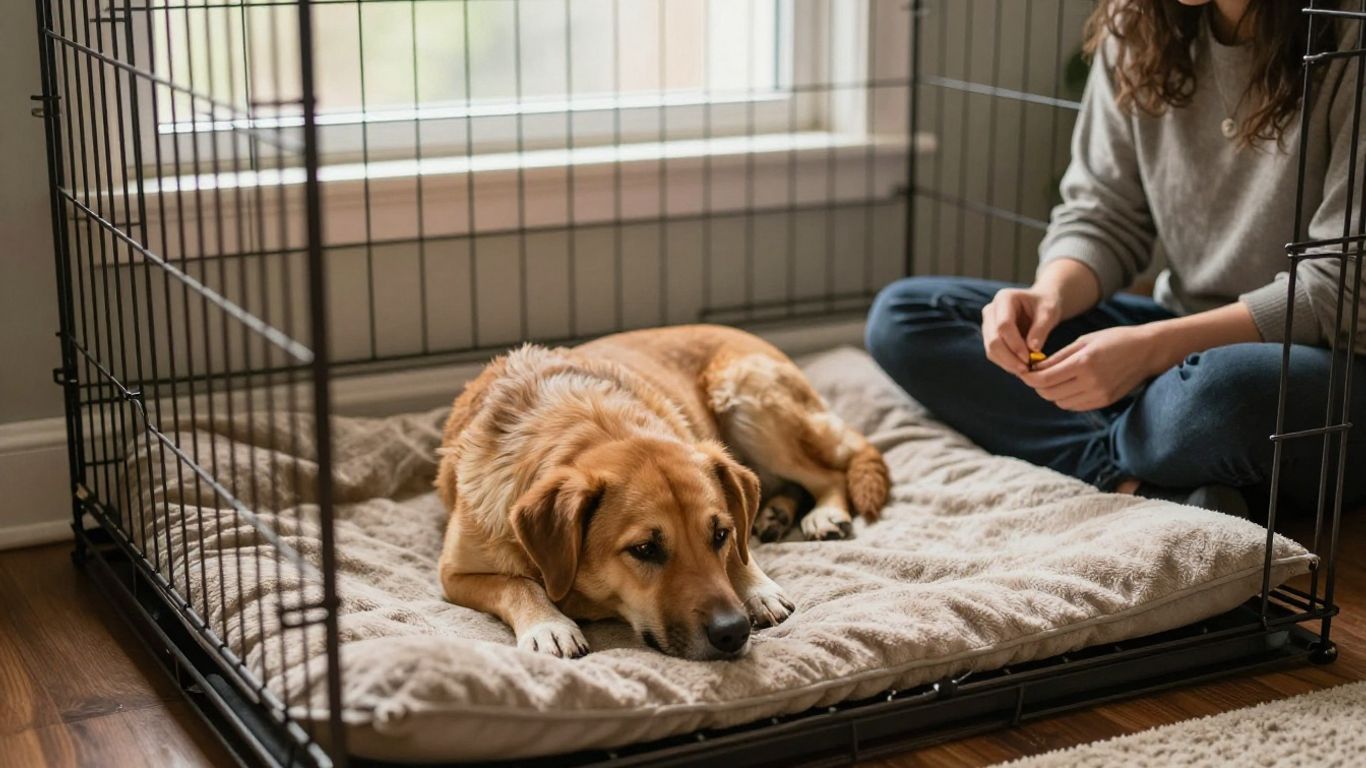
Choose a crate that fits your dog
A good crate gives your dog room to rest without feeling lost in a space that is much too large. Think about your dog’s size, temperament and daily routine, as well as where the crate will sit at home. The aim is a comfortable place your dog can choose to enter and settle in.
Measure for comfortable standing, turning, and stretching
Your dog should be able to stand upright without crouching, turn around easily and lie down in a natural position. Measure your dog while standing, and check the crate’s internal dimensions rather than relying only on its listed size. If your dog is still growing, you may need to reassess the fit as they get bigger.
Compare wire, plastic, and soft-sided crate designs
Different designs offer different levels of visibility, airflow and privacy, so consider how your dog responds to their surroundings. A wire crate lets your dog see out and is often straightforward to clean, while a plastic crate has more enclosed sides. Soft-sided crates are light and portable, but may not suit a dog who scratches or chews at the fabric. Think through the practical differences before choosing:
- Wire: open views and good airflow, with a more exposed feel.
- Plastic: more covered sides, which may feel cosier to some dogs.
- Soft-sided: light to carry, but best for dogs who are comfortable around fabric.
Whichever style you choose, check that the door closes securely and there are no sharp edges or gaps where paws or collars could catch. A design that suits your dog is more useful than one chosen just for its appearance.
Pick a quiet spot that still feels connected to family life
Choose a place where your dog can rest without being in the middle of constant activity. A corner of a living area can offer a quieter retreat while keeping your dog near the household. Avoid spots that are draughty, very warm or right beside noisy appliances, and let your dog settle without frequent interruptions.
Make the setup safe, comfortable, and easy to clean
A washable mat or bedding can make the crate more inviting, as long as your dog does not chew or swallow it. Keep the inside uncluttered, and choose toys that are safe for your dog to use without supervision. A simple, safe setup is easier to keep clean and lets you notice quickly if anything needs adjusting.
Introduce the crate at your dog’s pace
For your dog to feel comfortable, the crate needs to become familiar before you ask them to spend time inside with the door closed. Start with easy, low-pressure experiences and let your dog decide how close to get. Small signs of curiosity are a better starting point than trying to persuade a worried dog to go in.
Let your dog investigate with the door open
Set up the crate with the door secured open so it cannot swing shut unexpectedly. Give your dog room to sniff around, look inside or walk away, and keep your own manner relaxed. You can sit nearby or go about a quiet activity; there is no need to lure your dog all the way in on the first try.
Build positive associations with treats, meals, and favorite toys
Once your dog is comfortable near the crate, you can place a treat just inside or offer a meal close to the entrance. If your dog chooses to step in, let them leave again freely at first. A familiar toy can also make the space more appealing, provided it is suitable for your dog to use safely. Keep these experiences easy enough that your dog remains willing to return.
Practice brief door closures before adding distance
When your dog is relaxed entering the crate, try closing the door for a moment while you stay nearby. Open it again before your dog becomes unsettled, then repeat only if they remain comfortable. Gradually build duration across multiple calm sessions, rather than making a single session much longer than your dog is ready for.
Notice signs of stress and slow down when needed
Watch your dog’s whole body, not just whether they make a noise. Pacing, persistent panting when the room is cool, trying to escape, or refusing a normally welcome treat can suggest that the step is too difficult. If you notice signs like these, make the next attempt easier and give your dog a chance to relax away from the crate. A useful principle is to make comfort the measure of progress, not the number of minutes completed.
If your dog is struggling, return to the last step where they could stay relaxed.
A pause is not a setback; it gives you information about what your dog can manage right now. Keep sessions low-key, and avoid shutting the door or moving away just to see whether your dog will tolerate it.
Build up to calm crate time
Once your dog can enter the crate willingly, you can gradually practise staying inside for short periods. Keep the early sessions calm and predictable, and let your dog out while they are still coping well. The goal is not simply a closed door, but a dog who can settle without feeling trapped.
Start with short sessions while you stay nearby
Invite your dog in when they are already fairly settled, then remain close as you briefly close the door. Stay where your dog can see or hear you, and open the door while they are calm. If they seem worried, shorten the session or leave the door open and practise entering again another time.
Add time and distance in small, manageable steps
When your dog is comfortable with brief closures, increase either the time you stay inside or the distance you move away, rather than changing both at once. You might take one step away and return, then gradually move around the room in later sessions. If your dog starts watching anxiously or cannot settle, make the next practice easier instead of pushing through.
Use a predictable cue to invite your dog inside
Choose a short cue, such as “crate” or “bed”, and say it in a calm, consistent voice as you invite your dog in. Reward the choice to enter, then let your dog leave when the practice is finished. Over time, the cue can help your dog understand what you are asking, but it should not become a way to force them into the crate.
Practice departures separately from crate training
A dog who is happy in a crate while you are home may still find it hard when you leave. Practise stepping away briefly while your dog remains settled, and return before they become distressed. Keep departure practice separate from longer crate sessions so you can tell whether the difficulty is being confined, being alone, or both.
Fit crate training into daily routines
Crate training works best as one part of a day that includes toileting, movement, companionship and rest. Your dog’s needs will vary with age, health, habits and the length of time they have been awake. Build a routine around your dog rather than expecting them to fit a fixed schedule from the start.
Set a potty schedule based on age and individual needs
Give your dog a chance to toilet before a crate session and again soon after they come out. Puppies generally need more frequent opportunities than adult dogs, and a newly adopted dog may need time before you understand their usual pattern. Keep track of when your dog tends to need a break and adjust the routine accordingly.
Plan naps and quiet time around activity and exercise
A calm period after a walk, play or training can be a good time to offer a nap in the crate, once your dog has had a chance to toilet and wind down. Avoid using the crate to replace exercise, interaction or enrichment. If your dog is restless, consider whether they need a break, activity or company before asking them to settle.
Create a calm bedtime routine for overnight crating
Keep the lead-up to bed familiar and unhurried: offer a final toilet break, lower the household activity and invite your dog into the crate with the cue they know. Place the crate close enough that you can hear your dog if they need attention, especially while they are still settling into the routine. If nights are unsettled, review the pace of daytime training and the timing of toilet breaks.
Adjust crate time to avoid long stretches without a break
Plan regular opportunities for your dog to get out, stretch, toilet and connect with you. A crate should not be used as a way to leave a dog confined for longer than they can comfortably manage. If your daily routine would mean a long stretch without a break, arrange another safe option or a person who can let your dog out.
Respond to common crate-training challenges
Some dogs take to a crate quickly, while others need a slower introduction or may not be comfortable using one. A difficult session does not tell you that your dog is being stubborn. Look at what happened just before the behaviour, what your dog did, and whether the session may have asked for too much.
Tell the difference between brief protest and real distress
A short whine can happen as your dog adjusts, but persistent or escalating distress needs a different response. Look for several signs together, such as frantic scratching, repeated attempts to escape, heavy panting or an inability to settle. If you are unsure, choose the safer course: calmly end the session and make the next practice easier.
Handle whining without rewarding or ignoring panic
First check whether your dog needs a toilet break, is uncomfortable or has been left longer than they can manage. If they seem panicked, do not wait for them to become exhausted before responding; help them out calmly and reconsider the step you practised. For mild, brief fussing when your dog is otherwise relaxed, you can wait for a quiet moment before opening the door, so the release is not timed to a burst of noise. Keep the response gentle and base it on your dog’s behaviour, not a rule that every whine must be ignored.
Revisit earlier steps if your dog resists entering
If your dog backs away, freezes or refuses a treat near the entrance, take pressure off and let them move away. Return to an earlier step, such as rewarding a glance towards the crate or placing food near it with the door open. You can build comfort in small increments, but your dog should always be free to leave during the early stages.
Know when to stop and seek help from a qualified trainer
Pause crate practice if your dog repeatedly panics, risks hurting themselves or cannot settle even when you make the sessions easier. A qualified trainer who uses kind, reward-based methods can help you assess what may be contributing and plan a gradual approach. Some dogs may need a different safe resting arrangement, and that can be a sensible choice too.
Adapt the plan for your dog
There is no single timeline that suits every dog, and a crate is not essential for every household. Consider your dog’s age, past experiences, physical comfort and response to being separated from you. Keep checking in as you practise; the plan should change when your dog’s needs change.
Change the pace for puppies and newly adopted dogs
Puppies often need frequent toilet breaks and may have only short stretches of comfortable settling at first. A newly adopted dog may also be getting used to unfamiliar sounds, people and routines, so give them time to learn that the crate is a safe option. Keep sessions brief, stay nearby when needed, and let their behaviour guide the pace.
Account for an adult dog’s past experiences
An adult dog may arrive already comfortable with a crate, or may have learned to associate one with being shut away. Start by observing how they respond, and do not assume that age makes the process quicker. If they hesitate, go back to open-door exploration and reward voluntary approaches before trying any closures.
Make accommodations for senior dogs and mobility needs
Check that your dog can step into the crate and turn around without difficulty. A low entrance, non-slip flooring or a more accessible resting area may be more suitable for a dog who moves carefully. If your dog appears uncomfortable or their mobility changes, stop expecting them to use a setup that no longer works and consider a different arrangement.
Reassess the setup as your dog grows or routines change
A crate that suited a small puppy may become cramped as they grow, and bedding or toys that worked before may no longer be a good fit. Recheck the space, door and overall safety from time to time. A move, a new household schedule or a change in how your dog responds can also be a reason to adjust the routine.
Conclusion
A crate can become a comfortable resting place when you choose a suitable setup, introduce it without pressure and build up time gradually. Pay attention to your dog’s signals, make room for breaks and change course when the crate is not working for them. With a patient approach, you can find a routine that supports your dog’s comfort as well as your household’s needs.